
Three Days in Court: The Story of Enoch Whitehouse

Enoch Whitehouse (1893-1954) was born aboard a canal boat, the youngest of 10 children. Being a transient family who were based on the waterways of England, the Whitehouse family proved tricky to trace through government records.
Getting to Know a Nineteenth Century Rural Farming (U.S.) Neighborhood Through Maps

In this presentation, you’ll not only see the 1874 cabin that started it all, but also a peak at the online map now open to others.
Piecing Together Enslaved Lives in Port Royal, Jamaica

Linking names in the triennial slave registers and Anglican parish records provides a critical bridge for advancing research forward from the slavery era.
Plan your one-place study with an AI squad — four tools, one sharper researcher.

Meet Gemini as your Research Strategist, Claude as your Data Specialist, Perplexity as your Contextual Researcher, and Gemini Notebook as your Knowledge Keeper.
October Palaeography Club
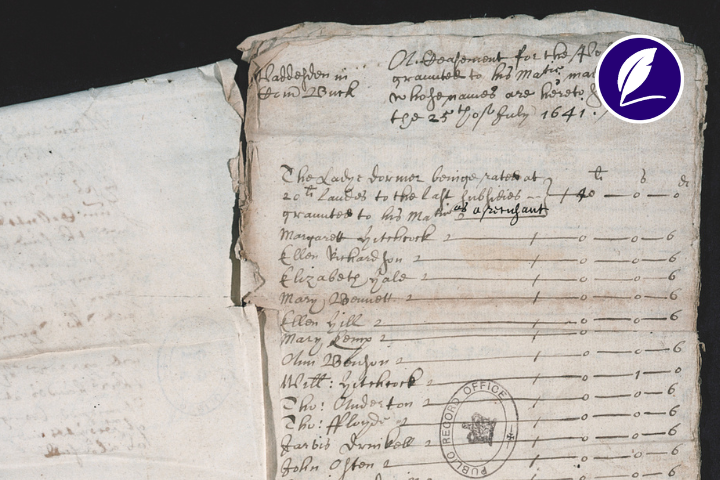
This month Palaeography Club transcribe a medical practitioners license plus a look at a tricky card from the Great Card Index
Beyond the Parish Register: Finding Seventeenth-Century Ancestors through Place

This short talk introduces a selection of name-rich records that reveal the people who lived in a seventeenth-century community, including tax records, manorial documents, probate, parish records and other local sources.
Reflecting on Your Place Research

Do you have a place of interest that you are researching? Take some time to consider your achievements and explore future possibilities.
SoG Palaeography Club

Discover how to make sense of old handwriting with this special ten-minute taster of the Society of Genealogists’ Palaeography Club.
Ten Tips To Finding Missing Ancestors In Nine Minutes Thirty Five Seconds

Join Simon Fowler as he suggests ten places where they may have got to and offers tips – based on personal experience -on how to find them.
Reading Between the Lines: How to Interpret Parish Registers Using Mind Mapping

Parish registers hold much more than names and dates. They can reveal clues about family relationships, difficult times, and the communities our ancestors lived in – if you know what to look for.