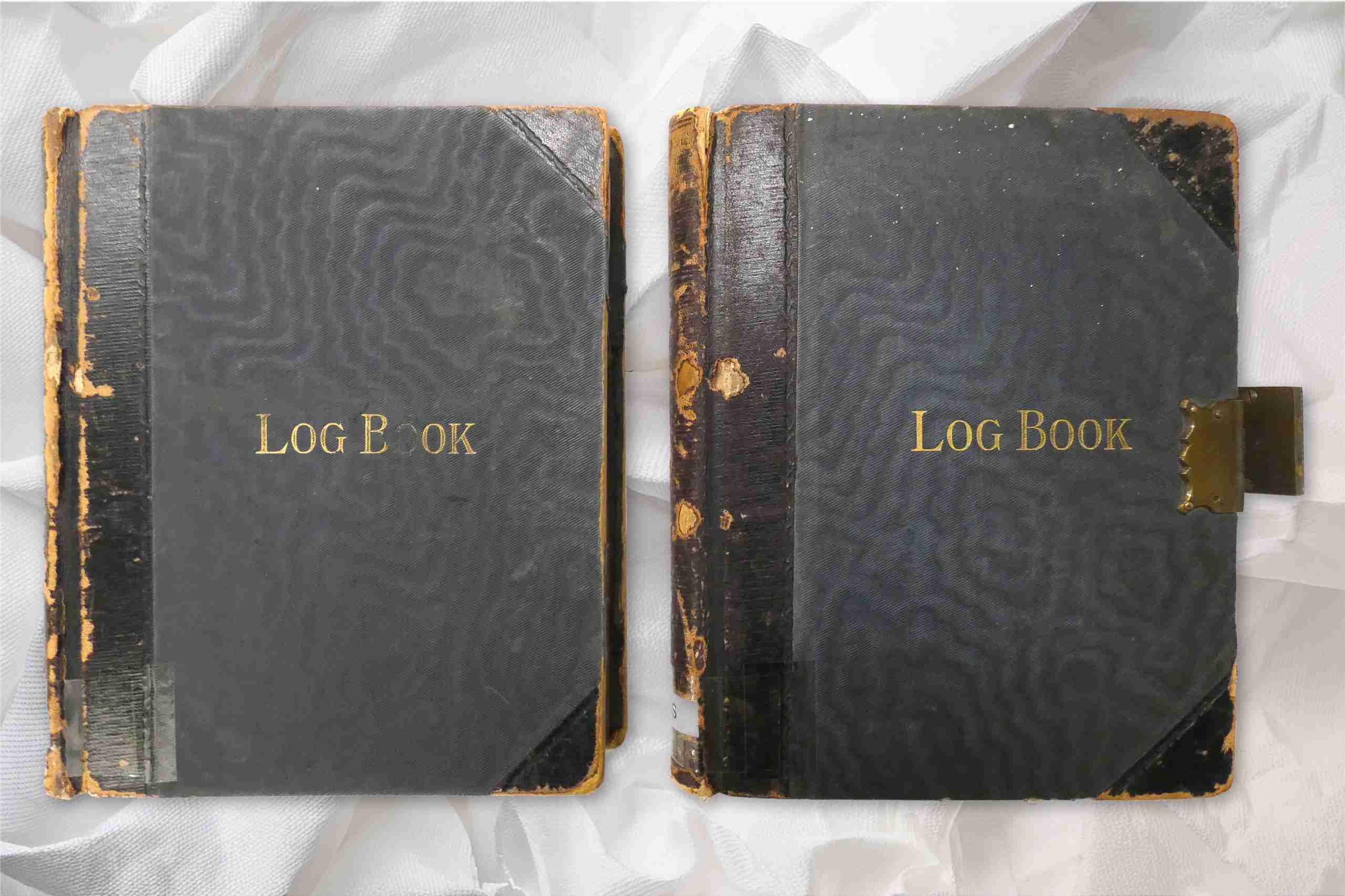
Two school log books held by the Society of Genealogists
West Green School in Tottenham, London was founded in 1856 and served the community through a period of great social change. I examined two log books covering two departments: the Infants’ Department (1914-40) and the Girls’ Department (1917-33). Both these records suggest that the school operated only for girls until an entry on 26 July 1933 stating that upon the return of the summer holidays the school would reopen under a Mr Boliths as a junior mixed school. After this change of status 22 children were admitted. These two volumes span the First World War, the interwar years and the beginning of the Second World War, placing them within a very significant period of British history.
What are school log books?
School log books were official records, required by the Education Committee, and kept by the headteacher. They were used to record details such as attendance figures, staff absences and any significant incidents affecting the running of the school. For example, in November 1914, the Education Committee ordered that afternoon lessons would begin at 1:30pm and that the school close half an hour earlier than usual.
The books also recorded reports from Tottenham Education Committee which stated, on 3 March 1929, that ‘generally speaking one gets an impression of girls being really educated and prepared for life’, signed by the Director of Education, Arthur John Linford. Contradicting an earlier report in 1924 which claimed that ‘many of the children come from poor homes, and a considerable number are of limited intelligence’.
Why are school log books important to genealogists?
Log books provide genealogists and social historians with the ability to look at first-hand accounts of daily life for headteachers and students. They document the circumstances in which pupils were educated.
For example, in the West Green log book, it was recorded that on 29 January 1918, 123 students were absent, illustrating how attendance could fluctuate dramatically.
Staff names appear regularly too, which helps offer potential connections to census and employment records such as the Teachers Registration Council. More importantly, the entries help provide context. If an ancestor went to West Green School during these years, the log books capture something of the environment they experienced, from wartime precautions to public health crises.
The West Green Log Books are particularly interesting in terms of their national and local events making them valuable when compared with other school log books that might focus primarily on only administrative routines. During the First World War, entries frequently refer to air raids such as on 6 July 1917 when children were sent home early. In March 1918 it was ordered that raid signals and bells would be tested weekly. These details help to demonstrate how the war directly affected daily life in Tottenham and the disruption of education.
The emotional impact is also visible. In August 1917, Mrs Sever was absent two and a half days a week to visit her wounded son. In May 1917, a headteacher formally resigned charge of the school, leaving the Second Mistress in charge until a replacement was made. These brief entries help preserve moments of personal and institution disruption.
Public health emergencies are recorded with equal clarity. In July 1918, the headteacher noted that 102 children were absent due to an Influenza Epidemic, with the oldest girls most severely affected. By November 1918, the epidemic was described as ‘gradually subsiding’. These entries likely relate to the global influenza pandemic and show how international events shaped local attendance.
National moments of remembrance were also recorded. On 11 November 1919, work was ceased for teachers and students for 2 minutes at 11 a.m., then followed by hymns, reflecting how religion was incorporated into school life during wartime.
The Interwar years brought routine and cultural activity. In 1930, 61 girls aged 12 and over attended a screening of The Epic of Everest, a documentary about the Everest expedition. Such entries show that educational experiences extended beyond the classroom.
On 1 September 1939, the tone changed significantly. Teachers and children were assembled for evacuation as the Second World War began. Later entries reflect the disruption and uncertainty of wartime evacuation.
A value beyond names and dates
The West Green Log Books stand out for the frequency with which they reference events beyond the school. They do not merely document attendance and staffing, but also capture air raids, epidemics, remembrance, evacuation and administrative change. As such, they offer more than a record of school management, they provide a chronicle of a community responding to global events.
The West Green School Log Books serve not only as administrative documents but as valuable historical sources. Through concise daily entries, they reveal how national crises, leadership changes, illness and cultural developments shaped the everyday lives of Tottenham’s children.
More about SoG's school log books
Enjoy learning more about schools, including a close up look at our collections.
More about schools in Tottenham, London